
Case Study — Client Website · Pre-launch
Pedregal Property Group: positioning a property firm around the lifecycle its clients actually live
Integrated property firms are genuinely hard to explain: advisory, capital, development, leasing and management read as five disconnected departments. WeDevelop’s positioning work turned that problem into the answer. One real-estate lifecycle — Identify, Structure, Deliver, Optimise — became the proposition, the page structure and the way every service is found.
How this project relates to WeDevelop
Pedregal Property Group is an independent client of WeDevelop. The build is complete and running on a WeDevelop demo environment; the final production domain is not yet live. Evidence on this page is limited to screenshots of the site we built: no Pedregal photography, logos or imagery are reused as standalone assets. No commercial or search results are reported, because none have been measured.
Project summary
What Pedregal does, and what we were responsible for
Pedregal Property Group provides property investment, development and advisory services to owners, developers and investors. Its breadth is its strength and, on a website, its problem.
WeDevelop’s engagement began at positioning, not pixels: deciding what the firm’s breadth means to a client before designing how it looks. The positioning, UX, design, development and the four-stage lifecycle structure are WeDevelop’s work; the site runs on our demo environment ahead of its production launch.
- Category and market
- Integrated property investment, development and advisory, Johannesburg
- Relationship
- Independent client engagement
- Current stage
- Build complete on the WeDevelop demo environment; production domain not yet live
- Capabilities shown
- Positioning translated into information architecture, services taxonomy design, premium corporate design, full build and deployment discipline
The challenge
A multi-discipline firm usually makes the visitor do the sorting
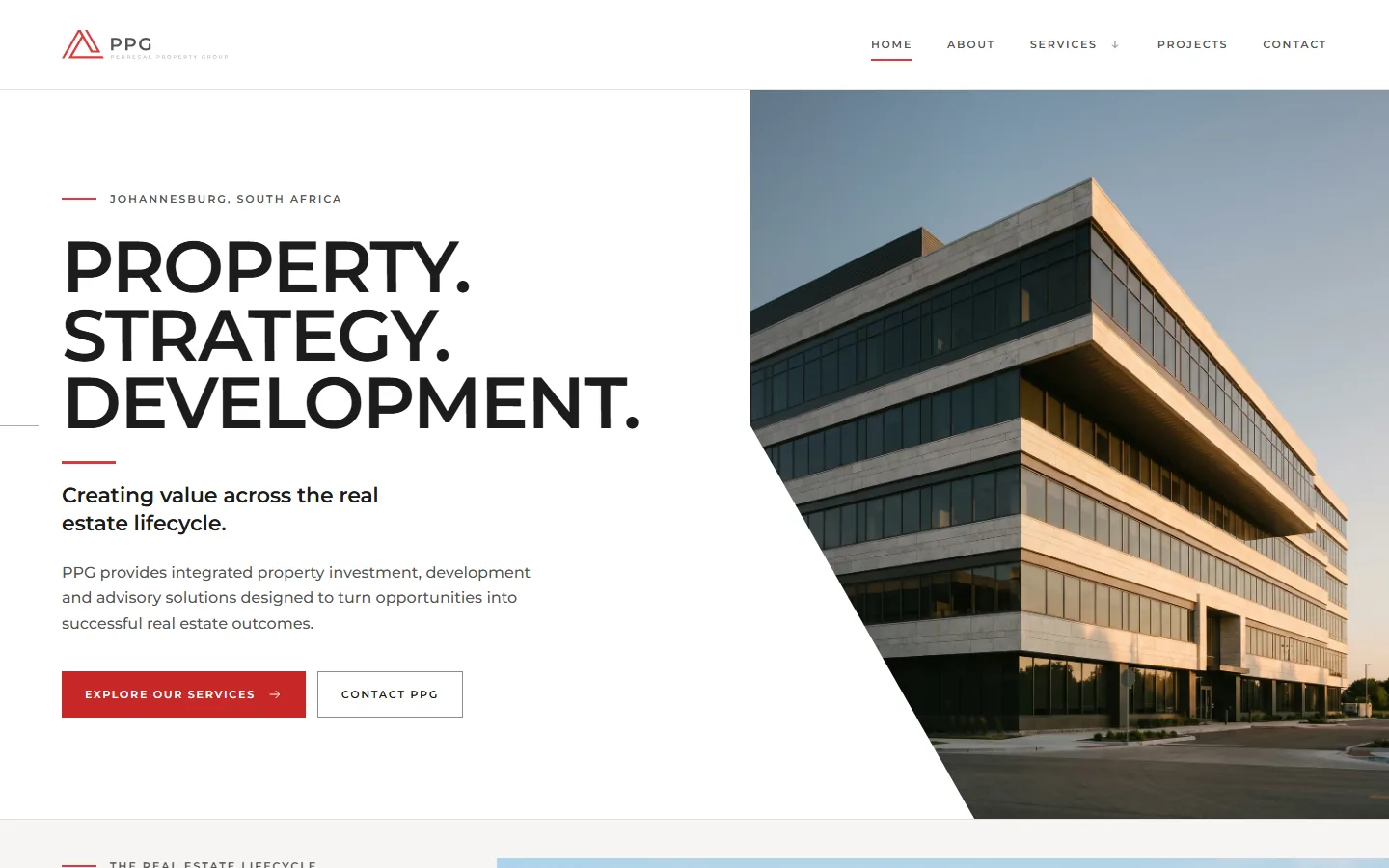
Most professional-services websites force the visitor to already know which service they need. The delivered proposition — “Creating value across the real estate lifecycle”, opening with “Property. Strategy. Development.” — had to organise five service lines so a client recognises their own situation first and finds the discipline second.
-
Five disciplines, one firm
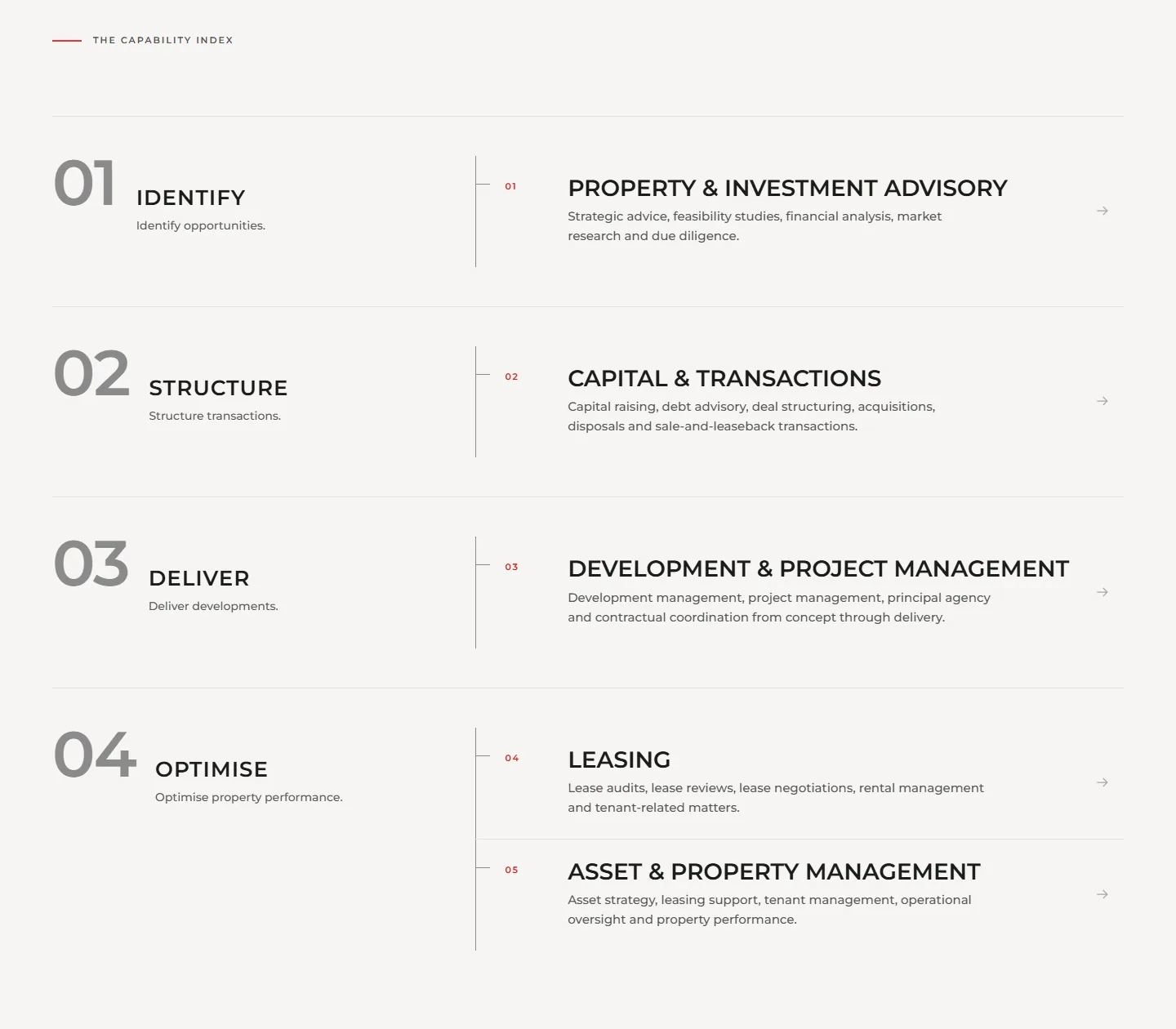
Advisory, capital and transactions, development and project management, leasing, and asset and property management had to read as one system a mandate moves through, not an organisation chart.
-
Premium without template genericism
Property websites default to the same glass towers and the same adjectives. The register had to be restrained and specific enough to feel like this firm.
-
Depth that keeps the structure
Each of the five service routes needed its own page without losing the lifecycle logic that makes the homepage work.
-
Honesty where the portfolio is not ready
The firm’s project profiles were still being prepared. The site had to say so rather than pad the page.
Positioning and structure
The lifecycle is the navigation, the taxonomy and the positioning at once
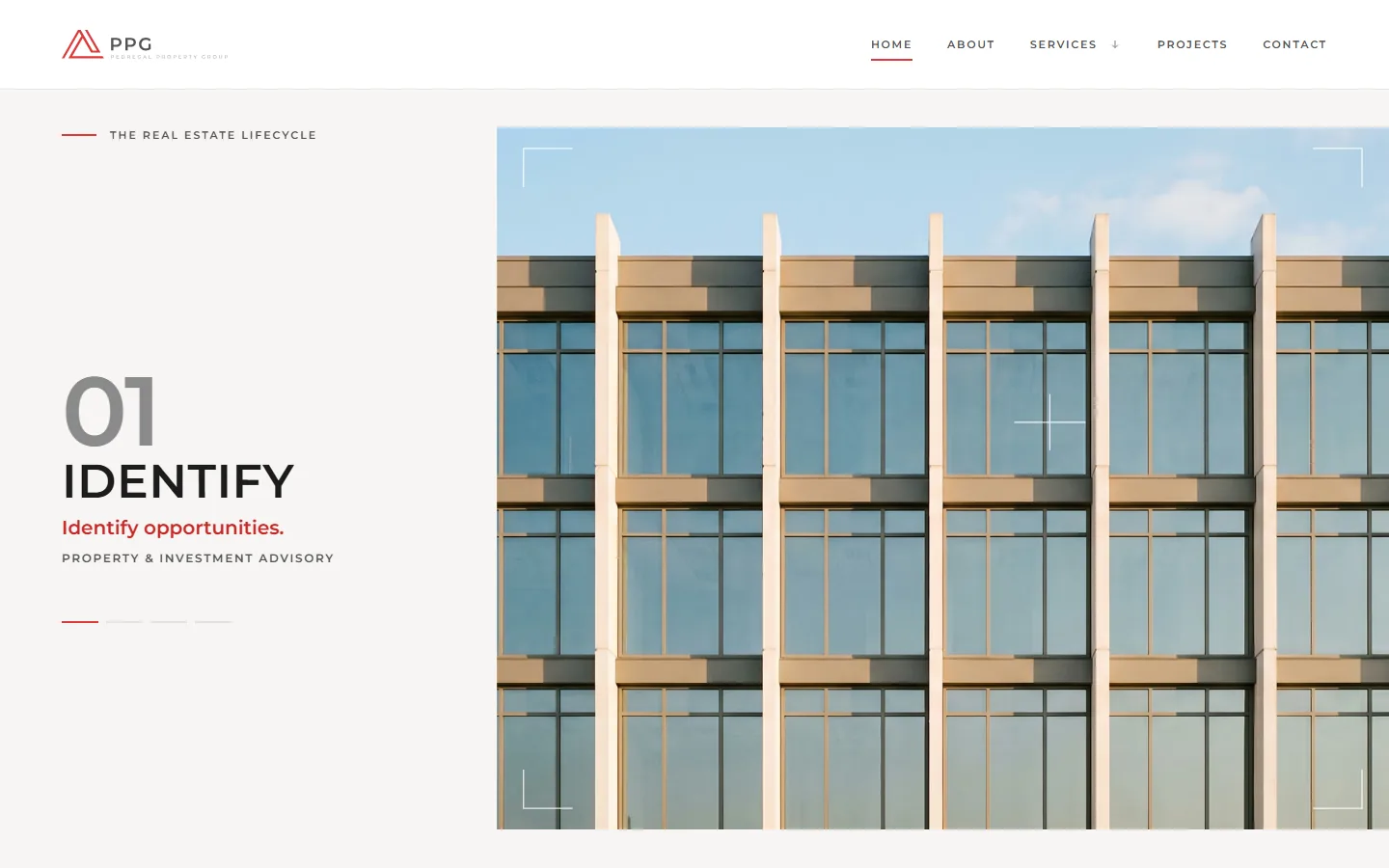
Rather than bolting a diagram onto a services list, the four-stage property lifecycle became the logic of the whole site. On the homepage the stages unfold as a scroll-driven sequence around architectural photography; on the services page they become a capability index that maps each of the five service routes to a stage.
The four-stage lifecycle, in the client’s own verbs
- 01 Identify
- 02 Structure
- 03 Deliver
- 04 Optimise
Identify opportunities: property and investment advisory. Structure transactions: capital and transactions. Deliver developments: development and project management. Optimise property performance: leasing, asset and property management. A client recognises which stage they are at, then finds the discipline.
Key decisions
Five decisions that shaped the site
These are the choices that made the lifecycle hold from the proposition through to the deepest service page.
-
Position around the client’s journey, not the org chart
- Decision, and why
- The firm’s five disciplines are presented as one system a mandate moves through: “One firm across the lifecycle”. Listing departments would have been accurate and useless to a client who does not yet know which one they need.
- What it enables
- A prospective client self-locates first and finds the discipline second, which is the order in which they actually think.
-
A restrained corporate register
- Decision, and why
- Light ground, disciplined typography, architectural photography and a single red accent. Premium through restraint rather than decoration.
- What it enables
- The site reads as considered and specific, and the single accent does the work of drawing the eye to actions.
-
Structure carried into depth pages
- Decision, and why
- Each of the five service routes carries the stage it serves, and “From concept to completion” details the development discipline on its own terms.
- What it enables
- The lifecycle logic survives the click: a visitor who arrives on a service page from search still understands where it sits.
-
Honesty about the project portfolio
- Decision, and why
- The projects page states that project profiles are being prepared and offers direct conversation instead. Placeholder tiles would have implied work that was not yet ready to show.
- What it enables
- The site stays credible in the one place a premium property firm is most tempted to overstate.
-
Values as commitments, not wallpaper
- Decision, and why
- Integrity, professionalism, commercial thinking, accountability and long-term relationships are presented as an operating list.
- What it enables
- The values section says something a client could hold the firm to, rather than filling space.
Experience and interaction
Scroll-sequenced on desktop, stacked in order on mobile
On desktop the lifecycle unfolds as a scroll-driven sequence: each stage arrives with its number, its verb and its discipline beside the photography. On mobile the same stages stack as a single-column narrative in the same order.
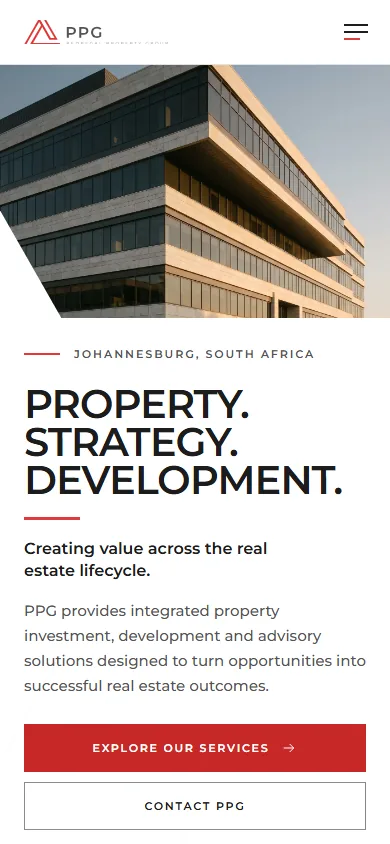
The multi-page architecture — About, a Services hub with five routes, Projects and Contact — is the same on every device. Nothing structural is hidden at small sizes.
Screens and visual evidence
The surfaces that carry the story
Two sections from the build where the structure becomes visible. Screenshots of the WeDevelop-built site on the demo environment, captured 22 August 2026; screenshots are the only Pedregal material used on this page.
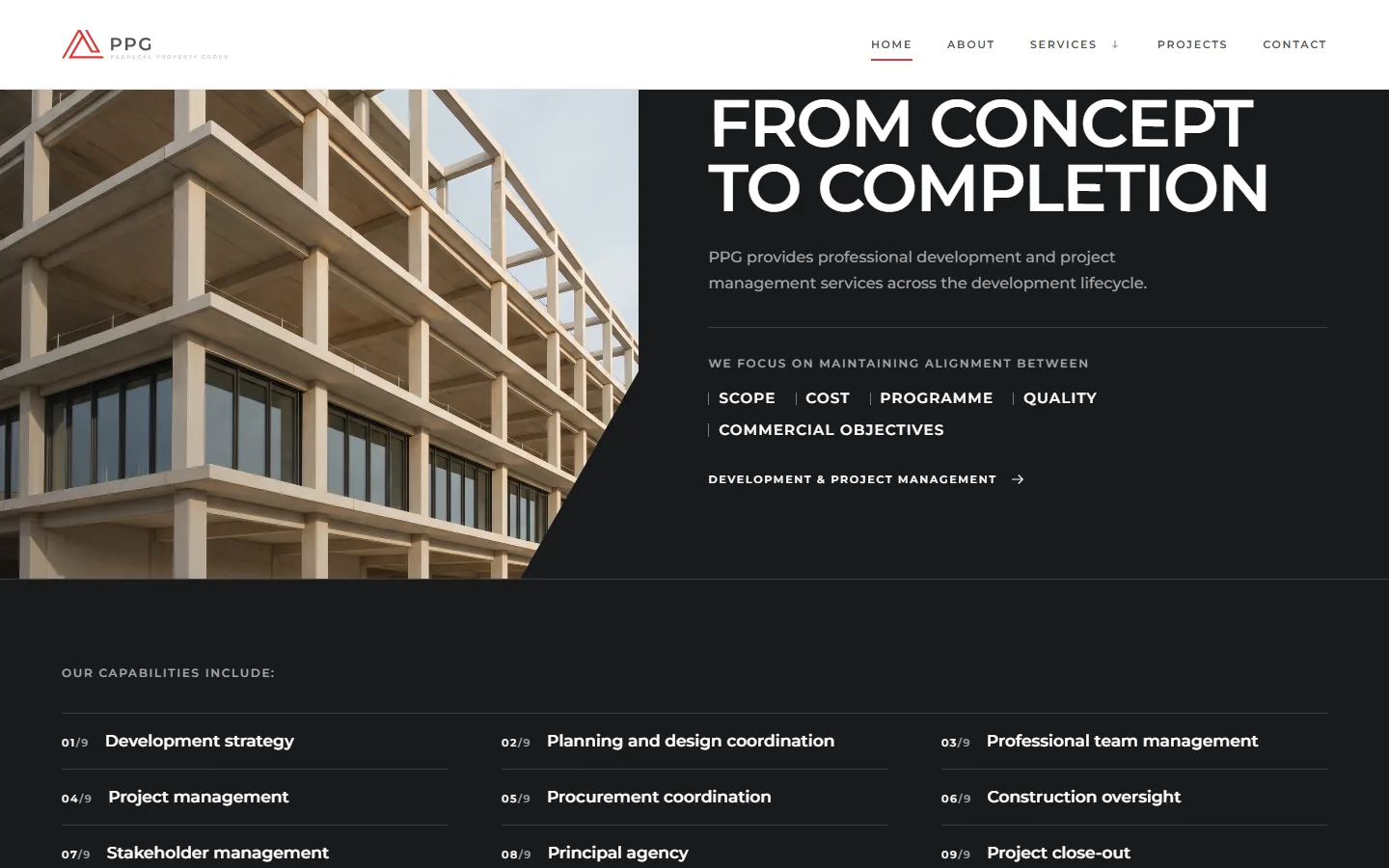
From concept to completion
The development and project management discipline on its own page: what the firm focuses on, from scope, cost and programme through to commercial objectives, and the capabilities beneath it.
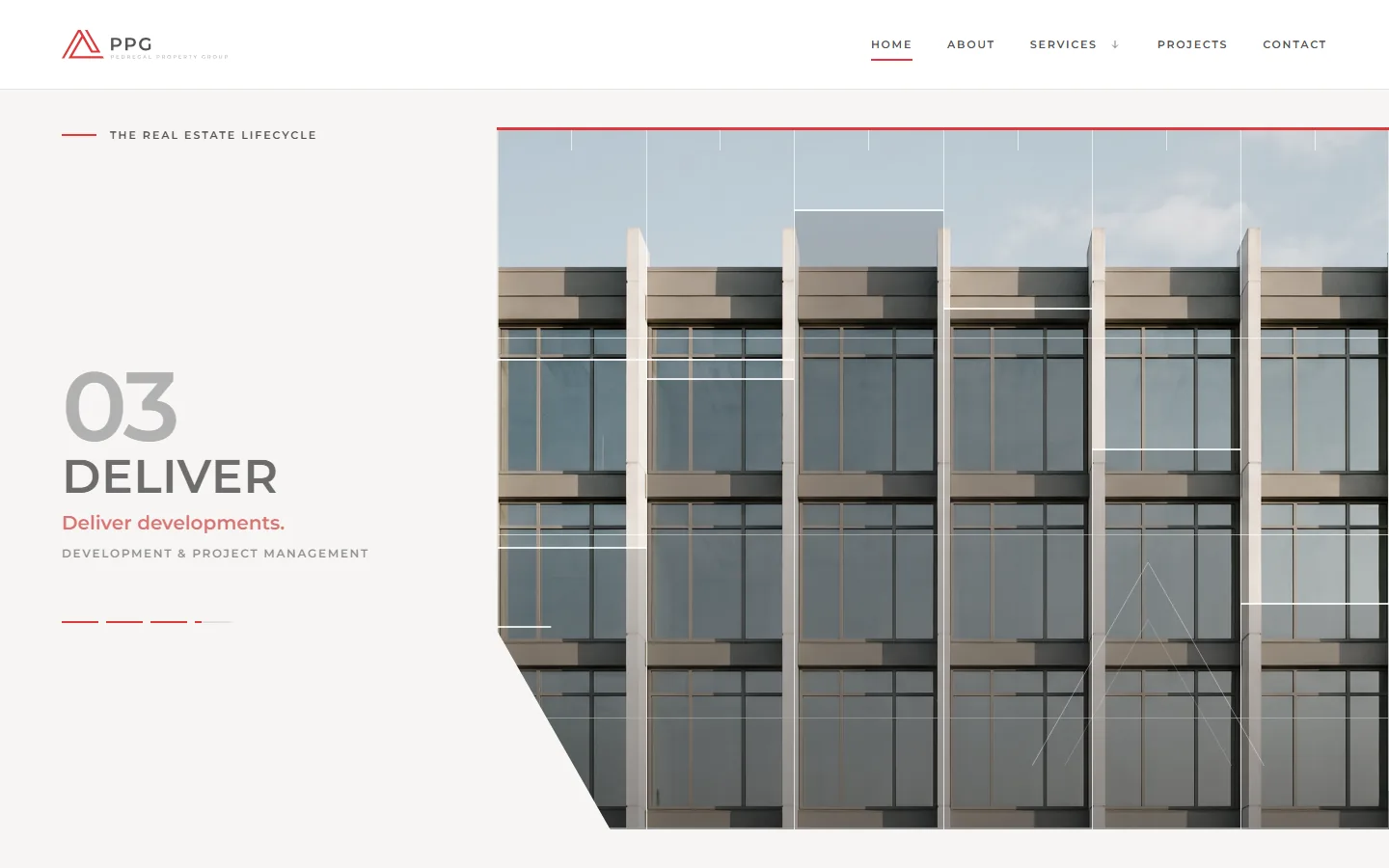
Stage 03: Deliver developments
A stage panel from the homepage sequence: the number, the client’s verb and the discipline that serves it — development and project management — beside the photography. Each of the four stages arrives the same way as the visitor scrolls.
Delivered scope and current status
Exactly where the project stands
The build is complete and running on the WeDevelop demo environment. This section separates what was delivered from what is not yet live and what is not claimed.
Built and complete
- Positioning and the four-stage lifecycle structure
- Multi-page architecture: About, Services hub and five service routes, Projects, Contact
- The homepage lifecycle sequence and the services capability index
- Responsive build, deployed to the demo environment
Pre-launch
- Final production domain not yet live
- Labels on this page update when the site goes live
Not claimed
- Commercial or search outcomes: not measured
- Pedregal photography or imagery as WeDevelop assets: screenshots only
- A go-live date: not known, so not stated
The lifecycle structure was designed to let a prospective client self-locate in seconds and to give the firm one coherent story across five service lines. That is stated as design intent. No commercial or search outcomes are claimed, because none have been measured.
What this demonstrates
What this work says about how we’d handle yours
Pedregal is the clearest example on this site of positioning turned directly into information architecture: the proposition and the navigation are the same decision.
- Positioning translated into structure The sentence that describes the firm is also the way the site is organised.
- Services taxonomy design Five service lines mapped to four stages, and carried into every depth page.
- Premium corporate design without template genericism Restraint, a single accent, and photography used as structure rather than decoration.
- Build and deployment discipline A complete multi-page site, deployed for review ahead of launch, with honesty where content was not ready.
Website Redesign
When an established firm’s site no longer explains what the firm has become, a positioning-led rebuild is usually the answer.
Explore website redesignWebsite Design
A new site for a firm with several service lines starts with the structure, not the homepage.
Explore website design and developmentWhat would this thinking find on your website?
The questions we asked of Pedregal are worth asking of any website. Can a visitor recognise their own situation before they have to choose a service? Does the structure survive the click into a deeper page? Is the site honest where the content is not ready?
If any of that sounds like your situation, tell us what you are trying to achieve and we will recommend where to start. If you would rather have a written second opinion on your current site first, a free Website Review is exactly that — the changes that would make the most difference, in priority order, with no obligation.
Or see the other projects, or get a free Website Review if you would like a second opinion on your current site first.