
Case Study — Client Website · Live
Vortex Trance Adventures: three decades of festival culture, given a navigable home
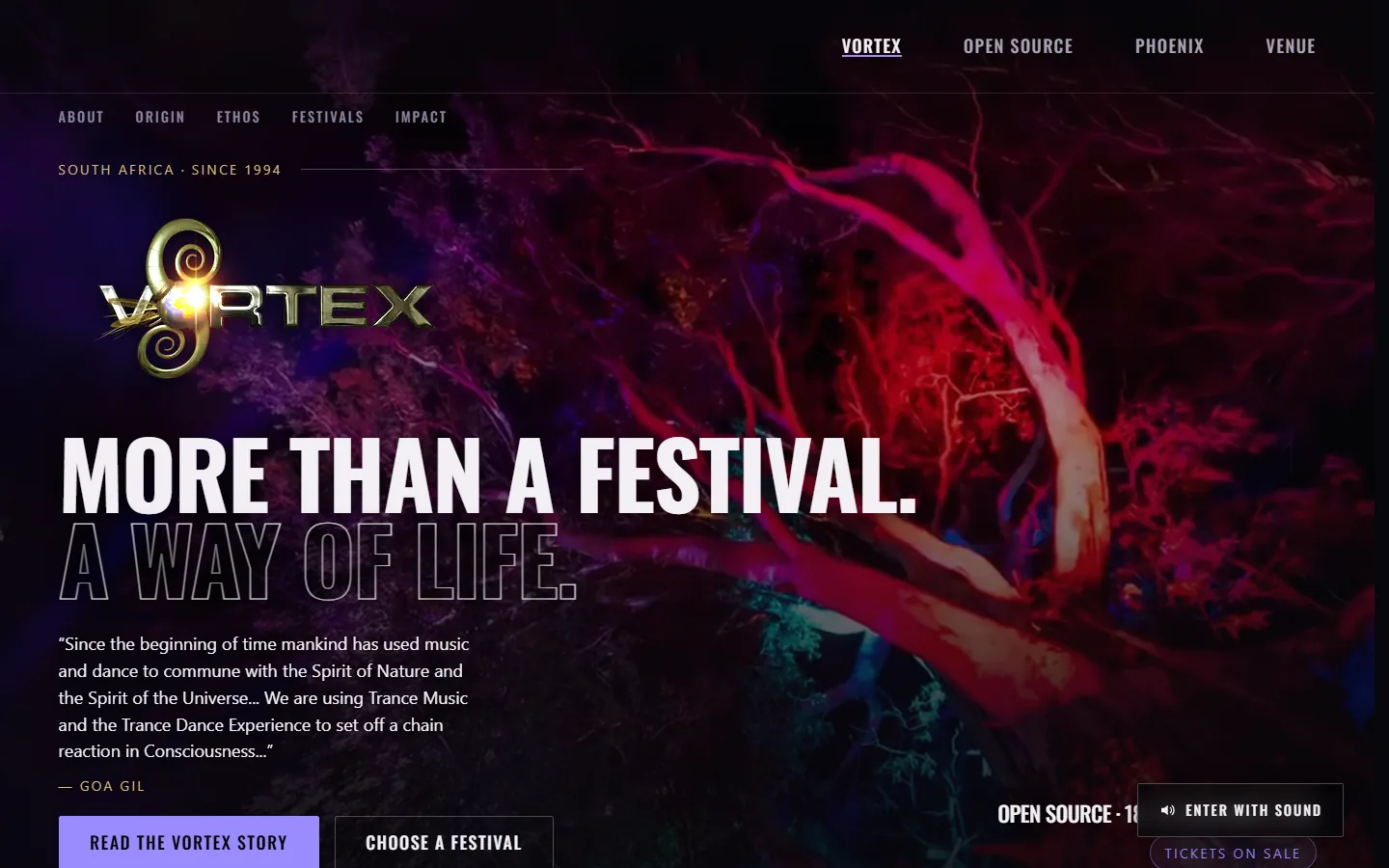
Vortex has been producing psychedelic trance gatherings in South Africa since 1994. Its story lived in three decades of memory and photographs, and in separate events with separate audiences. WeDevelop designed and built a single digital home that routes newcomers and veterans to the right gathering without flattening the culture that makes them want to go.
How this project relates to WeDevelop
Vortex Trance Adventures is an independent client of WeDevelop. This page describes the website we designed and built, evidenced with screenshots of the live production site. No traffic, ticketing or commercial results are reported, because none have been measured, and the launch date is not stated because it is not recorded.
Project summary
What Vortex is, and what we were responsible for
Vortex is a festival producer running distinct gatherings — Open Source in summer, Phoenix Festival of Fire in winter — on a private nature reserve venue, with a heritage archive reaching back to a 1994 warehouse party in Woodstock.
WeDevelop was responsible for the full website: strategy, UX, design, build, content and information structure, motion and deployment. The site is live on the client’s production domain.
The design problem was information architecture before it was visual design. Thirty years of history, two festival worlds, a venue, ticket sales and an ethos that matters as much as the line-up all had to be legible to a first-time visitor within seconds, without reading like an events-listing site.
- Category and market
- Psychedelic trance festival production, South Africa, since 1994
- Relationship
- Independent client engagement
- Current stage
- Live on the production domain; launch date not stated
- Capabilities shown
- Information architecture, content structure, design under a strong existing culture, motion, full-cycle delivery from strategy to deployment
The challenge
A culture with thirty years of history, and seconds to explain it
Vortex is not one event. It is a culture that produces events, a venue, an archive and a set of commitments about how a gathering should treat the land it uses. The website had to hold all of that and still answer the first question a visitor has: which gathering is mine?
-
Two worlds, one culture
Open Source and Phoenix have their own dates, line-ups, logistics and tickets. Presenting them as one undifferentiated events list would have hidden the choice; presenting them as two unrelated sites would have hidden the culture they share.
-
Heritage that is still alive
An archive reaching back to 1995 had to read as a living record rather than a museum wing nobody visits, and it could not crowd out the next gathering.
-
Tickets without the listings feel
Ticketing had to be reachable from the hero and from inside each festival world, without the site becoming a catalogue that asks for the sale before it has explained what is being bought.
-
The ethos as content
Local-first hiring, temporary installations, leave-no-trace and safety resourcing are part of what Vortex is. They needed first-class sections, not a paragraph in a footer.
Information architecture
Four worlds, with depth inside each rather than a deep page tree
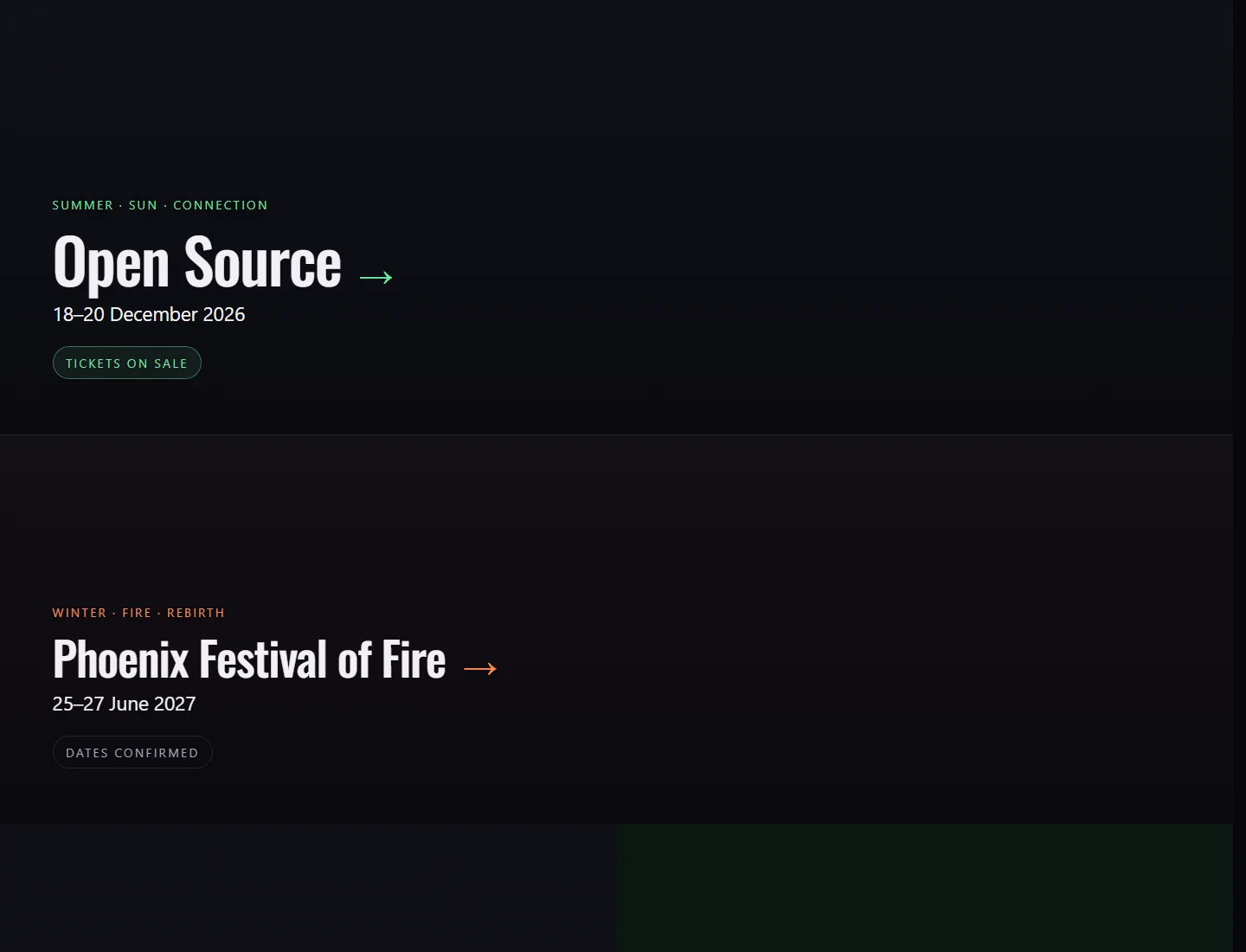
The homepage narrates culture first — shared experience, origin, ethos — and only then routes. “Choose your Vortex experience” presents the two gatherings side by side with their dates and ticket state, and each festival world carries a complete journey so a committed visitor never has to leave the world they chose.
-
World 01
Vortex
The culture and the story: About, Origin, Ethos, Festivals and Impact as in-page depth on the home world.
-
World 02
Open Source
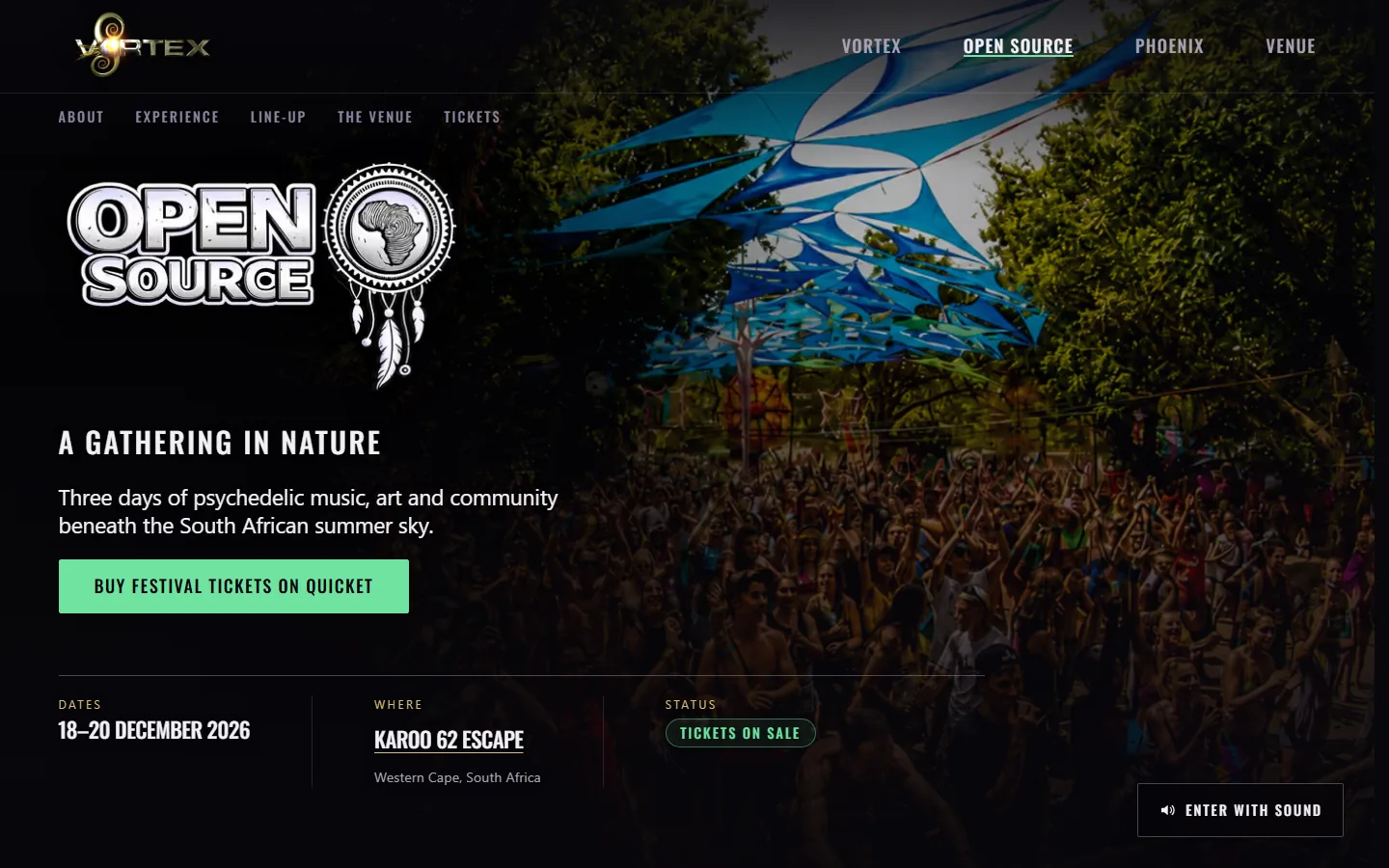
The summer gathering: experience, line-up, know-before-you-go logistics, accommodation and ticketing in one place.
-
World 03
Phoenix
The winter Festival of Fire, built on the same journey so the two worlds are comparable without being identical.
-
World 04
Venue
The private nature reserve both gatherings share, given its own world rather than a paragraph inside each festival.
The closing “Two worlds. One Vortex.” section resolves the routing decision explicitly: the culture is one thing, the gatherings are two, and the visitor chooses.
Key decisions
Five decisions that shaped the site
These are the choices that closed off other options. Each one is visible on the live site.
-
Heritage as a living record, not a museum
- Decision, and why
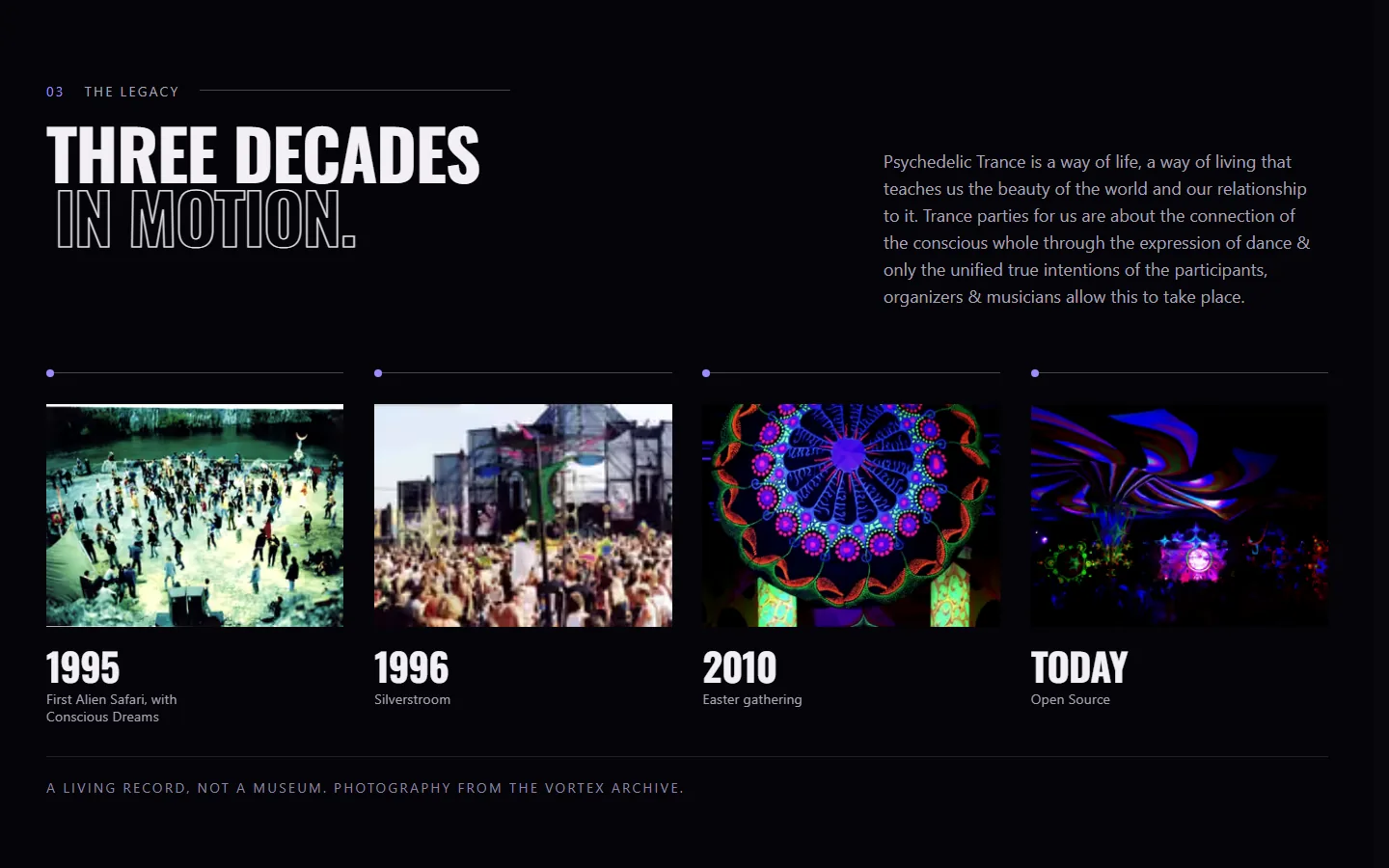
- The archive section, “Three decades in motion”, runs from 1995 to today in real archive photography with the site’s own caption: a living record, not a museum. A separate history page would have made the past optional reading; placing it in the home world makes it part of what a visitor learns first.
- What it enables
- Newcomers understand they are joining something with a history, and veterans find their own years on the page.
-
Sound as an invitation, not an ambush
- Decision, and why
- The experience offers “Enter with sound”; audio is visitor-initiated and never autoplayed. A sound-led festival brand invites autoplay, and autoplay is the fastest way to make a visitor leave.
- What it enables
- The atmosphere is available to anyone who wants it, and the site stays usable in an office, on a train, or on a data budget.
-
Culture before commerce
- Decision, and why
- Ticket actions exist in the hero and inside each festival world, but the narrative order establishes what the gathering is before asking for the sale.
- What it enables
- A first-time visitor arrives at the ticket decision already knowing what they would be buying into, which is the only way a ticket for a three-day gathering gets bought with confidence.
-
The ethos is content, not a footnote
- Decision, and why
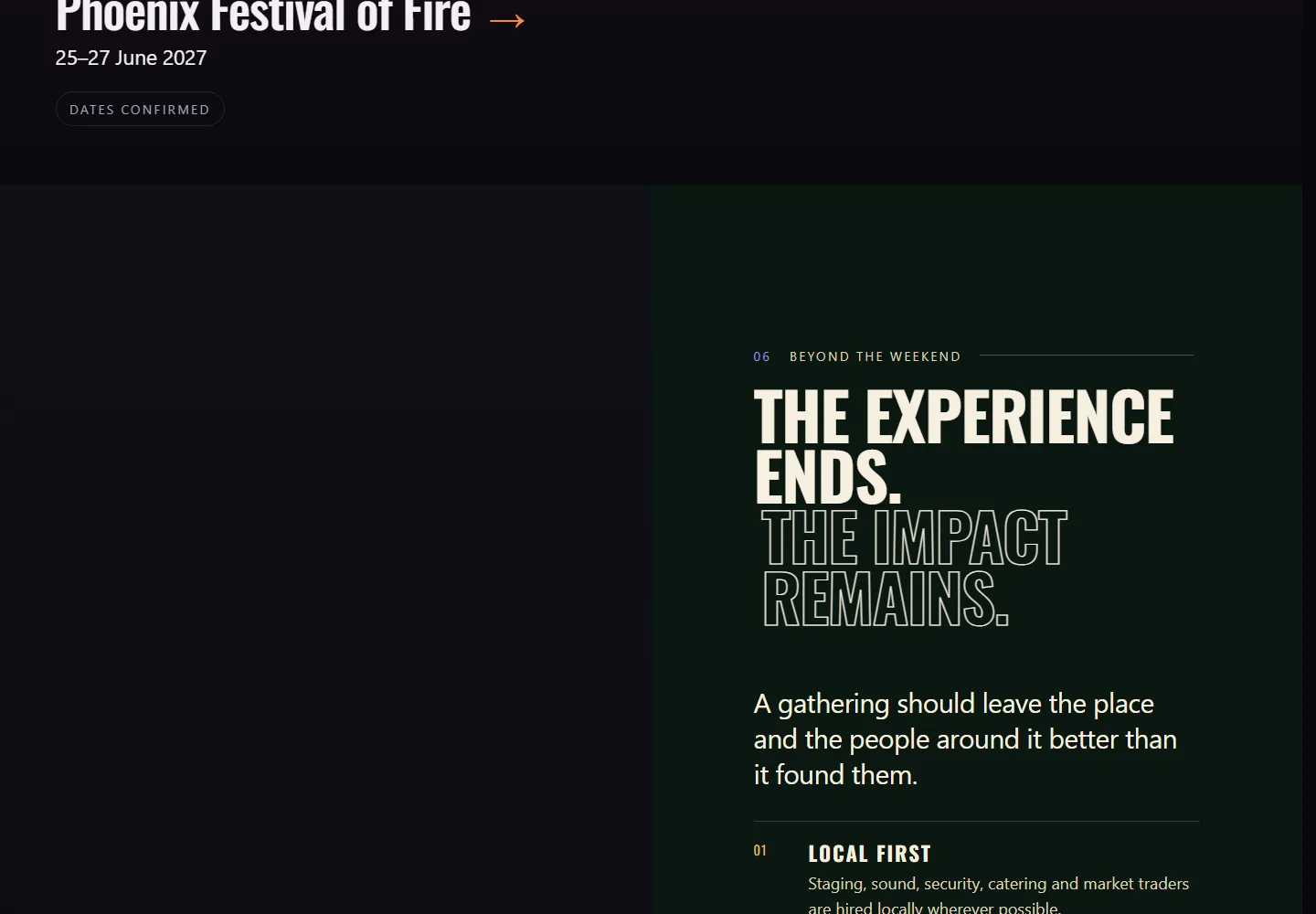
- “The experience ends. The impact remains.” documents local-first hiring, temporary installations, land clearing, leave-no-trace and safety resourcing as first-class sections.
- What it enables
- Commitments the organisation actually makes are visible where a sceptical visitor, a landowner or a partner would look for them.
-
A dark, festival-native visual register
- Decision, and why
- Ultraviolet photography and high-contrast type belong to Vortex’s world; the build keeps text legible against it. A lighter, more conventional register would have been easier to build and wrong for the audience.
- What it enables
- The site looks like the gatherings it represents, and the legibility work means it still reads on a phone in daylight.
Experience and interaction
Scroll-revealed narrative, the same order on every screen
Narrative sections and archive imagery are revealed as the visitor reads, with authored motion kept in service of the story rather than laid over it.
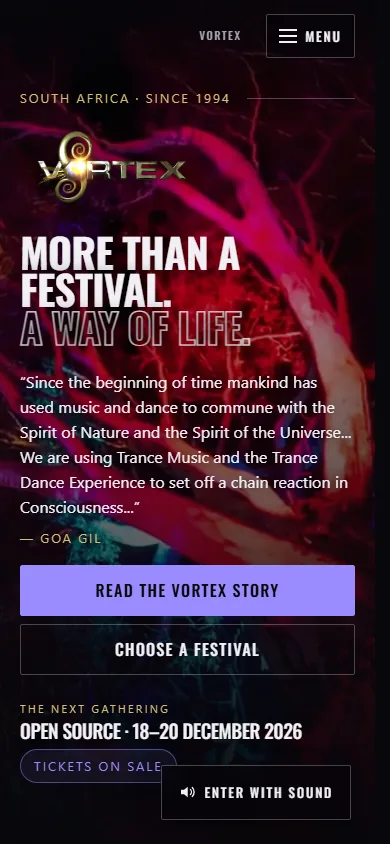
Mobile is a single readable column with the same narrative order and the same routing: the culture, the origin, the archive, then the choice of gathering and the ticket state. Nothing that exists on desktop is withheld on a phone.
Motion was in WeDevelop’s delivered scope. It is used for the reveal of sections and imagery; navigation, ticketing and the sound control never depend on it.
Screens and visual evidence
The surfaces that carry the story
Three sections from the live site where the information architecture decisions above became something a visitor reads. All are screenshots of vortextrance.co.za, captured 22 August 2026.
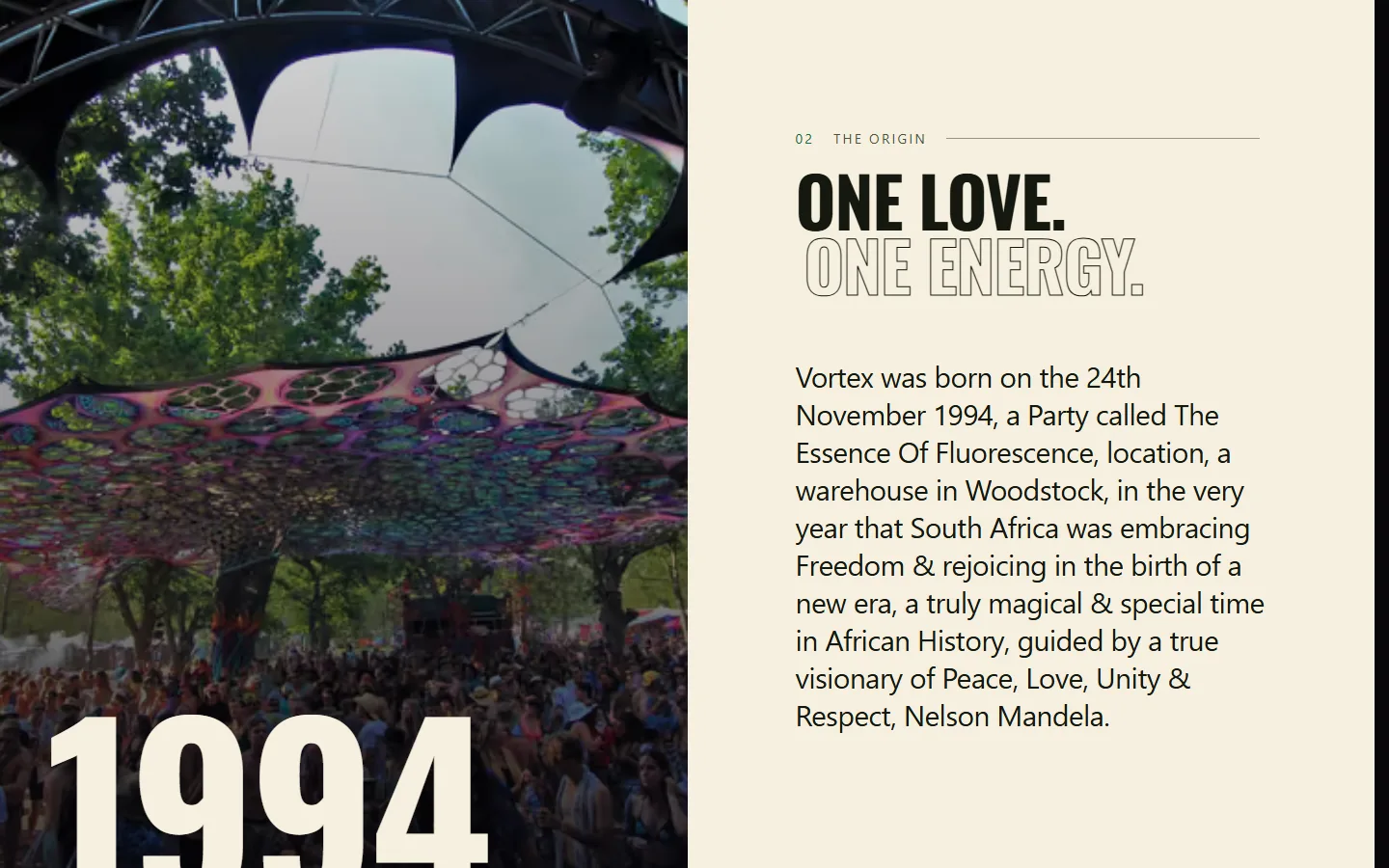
Where it started
The origin section places the 1994 Woodstock warehouse party at the start of the home world’s narrative, so the culture is introduced through its own history before the visitor meets the current gatherings.
Three decades in motion
Archive photography from 1995, 1996, 2010 and today, captioned by the site itself as a living record rather than a museum. This is the section that tells a veteran the site knows their history.
The experience ends. The impact remains.
The ethos section documents the organisation’s commitments — local-first hiring, temporary installations, leave-no-trace, safety — as a structured list, not a mission statement.
Delivered scope and current status
Exactly where the project stands
The website is live on the client’s production domain. This section separates what was delivered from what is not claimed.
Live now
- The production website at vortextrance.co.za
- Four worlds: Vortex, Open Source, Phoenix and Venue
- The heritage archive, 1995 to today
- Active ticketing paths for the next gathering
Delivered by WeDevelop
- Strategy and UX
- Information architecture and content structure
- Design and build
- Motion and deployment
Not claimed
- A launch date: not recorded, so not stated
- Traffic, ticketing or search outcomes: not measured
- Any result attributed to the redesign
The architecture was designed to make choosing a gathering fast for newcomers and to give the culture a permanent, navigable record. That is stated as design intent. No commercial, traffic or search outcomes are claimed, because none have been measured.
What this demonstrates
What this work says about how we’d handle yours
Vortex is a festival, not a business website. The reasoning is the same reasoning we apply commercially: structure first, honest labelling, and a build that holds up on the devices people actually use.
- Information architecture for a multi-audience brand Two gatherings, one culture, and a visitor who has to find theirs in seconds.
- Content structure for story-rich organisations Thirty years of material, ordered so the first read works and the deep read rewards.
- Design under a strong existing culture A register that belongs to the client’s world, kept legible.
- Full-cycle delivery Strategy, UX, design, build, content structure, motion and deployment on one project, to a live production domain.
Website Design
A new site that has to organise a lot of material for more than one audience starts here: structure and journey before pages.
Explore website design and developmentSearch, SEO & AEO
The content structure work on Vortex is the same discipline that makes a site findable and understandable in search. Read how we approach it.
How we approach searchWhat would this thinking find on your website?
The questions we asked of Vortex are worth asking of any website. Does a first-time visitor know which thing is theirs within seconds? Is the history an asset or an obstacle? Does the page explain before it asks?
If any of that sounds like your situation, tell us what you are trying to achieve and we will recommend where to start. If you would rather have a written second opinion on your current site first, a free Website Review is exactly that — the changes that would make the most difference, in priority order, with no obligation.
Or see the other projects, or get a free Website Review if you would like a second opinion on your current site first.